
Main Campus
2100 Silas Creek Parkway
Winston-Salem, NC 27103
Telephone
336.723.0371

STAY IN THE KNOWN


© Copyright 2007-2025. All rights reserved, Forsyth Technical Community College.
Privacy Policy


result

MENU
Home

President Spriggs Hails Record Year As Forsyth Tech Turns 65
Trailblazer Athletics Launches new Era at Forsyth Tech
A Note From Our Board of Trustees
A Note From Our Foundation Board
College Lift wins Heisman of Community Colleges
Education Design Lab
Welcome Week
High School Students Earn Associate Degree, Debt-Free!
Forsyth Tech Tailors Support to Every Student
Greater Winston-Salem,Inc. Letter to the Editor
I am Poem
Comic Strip
Crossword
Timeline
Classifieds
Honoring Dr. Martin Luther King, Jr.
Black History Month Celebrates Local History
Forsyth Tech Celebrates Academic Partnerships
Trailblazer Achievements and Awards
State’s Highest Officials Visit Forsyth Tech
Serving Forsyth and Stokes Counties
Foundation Gifts Help Trailblazers Rise and Thrive
Forsyth Tech Cares Serves 3,500 Students and Counting
Partnerships Turn Forsyth Tech Classrooms Into Careers
Apprenticeships Take Big Leap at Forsyth Tech
From Fall Fest to Spring Fling, Spirit Soars at Forsyth Tech
New Gym, Commons Highlight Campus Growth at Forsyth Tech
Forsyth Tech leads State in Community College Health Programs
Record-Setting Commencement – Largest in Forsyth Tech History!
Financials
Ask Foundation Frannie
Donors
A vision for skills and success: Mary Tucker’s commitment to Forsyth Tech
The Aspen Prize for Community College Excellence
Letter to the Editor From Edwin L. Welch, Jr.
Vision 2030
National Recognition from the Aspen Institute Highlights Forsyth Tech’s Commitment to Student Success
Trailblazer Taste Buds

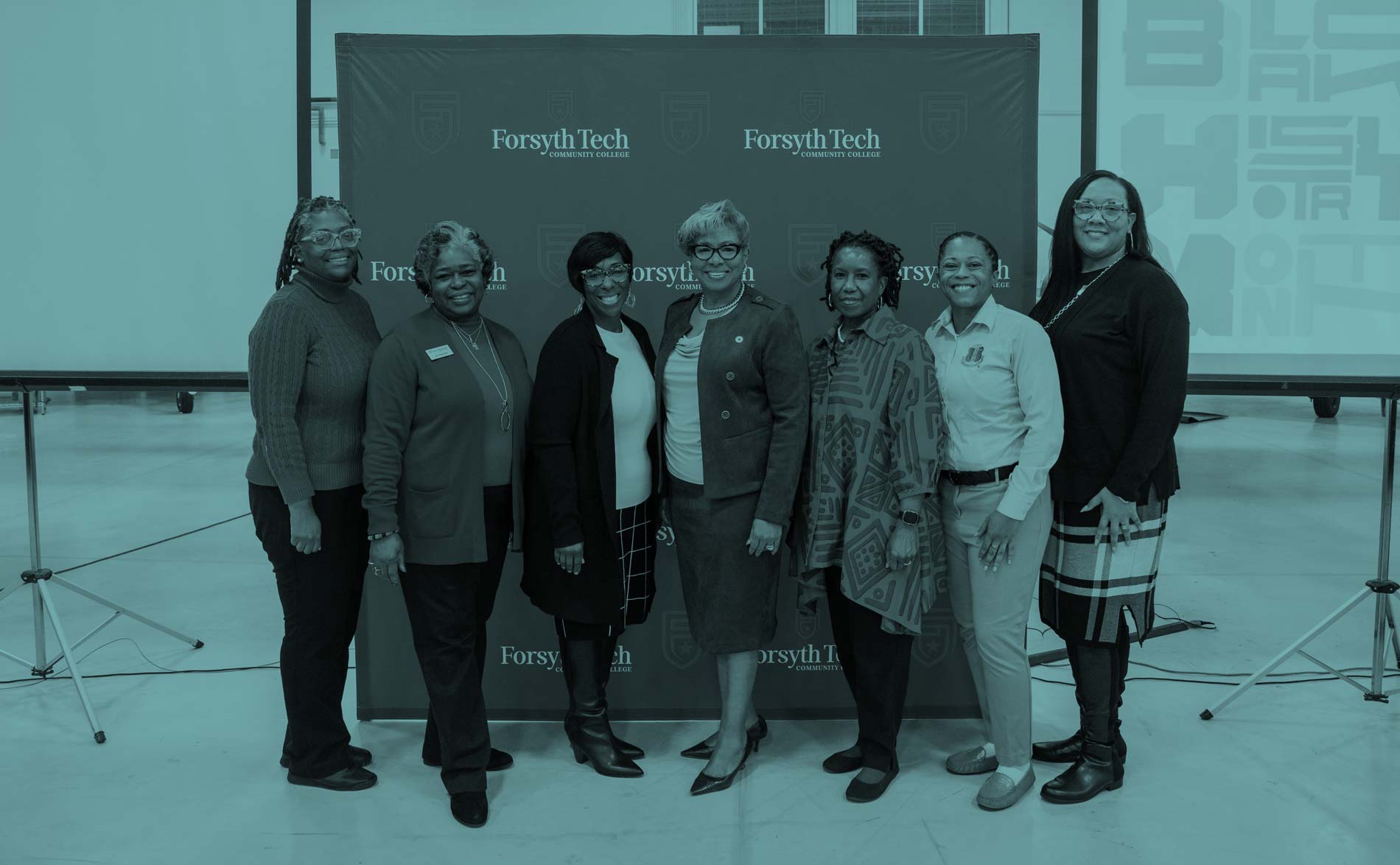

Black History Month Celebrates Local History
Ms. Anita Justice, founder of Dignity Justified and Historian-in-Residence at Triad Cultural Arts, captivated the audience with a keynote that truly brought history to life. A dedicated researcher, podcaster, exhibit designer and former classroom teacher, Ms. Justice focuses on preserving African American history and making it accessible to all.
In 2020, after over two decades in the classroom, Ms. Justice launched Dignity Justified as part of her mission to uncover and share inspiring, yet often neglected, stories from the past. Her passion for history as an educational tool was on full display during her address.
Drawing on her extensive research, Ms. Justice took attendees on a journey through the Civil Rights Movement in North Carolina and the local community. Her storytelling drew everyone in, illuminating the struggles, triumphs and resilience of those who fought for justice. She spoke about everyday people, including teachers, students, faith leaders and activists, who played crucial roles in the fight for civil rights right here in North Carolina.
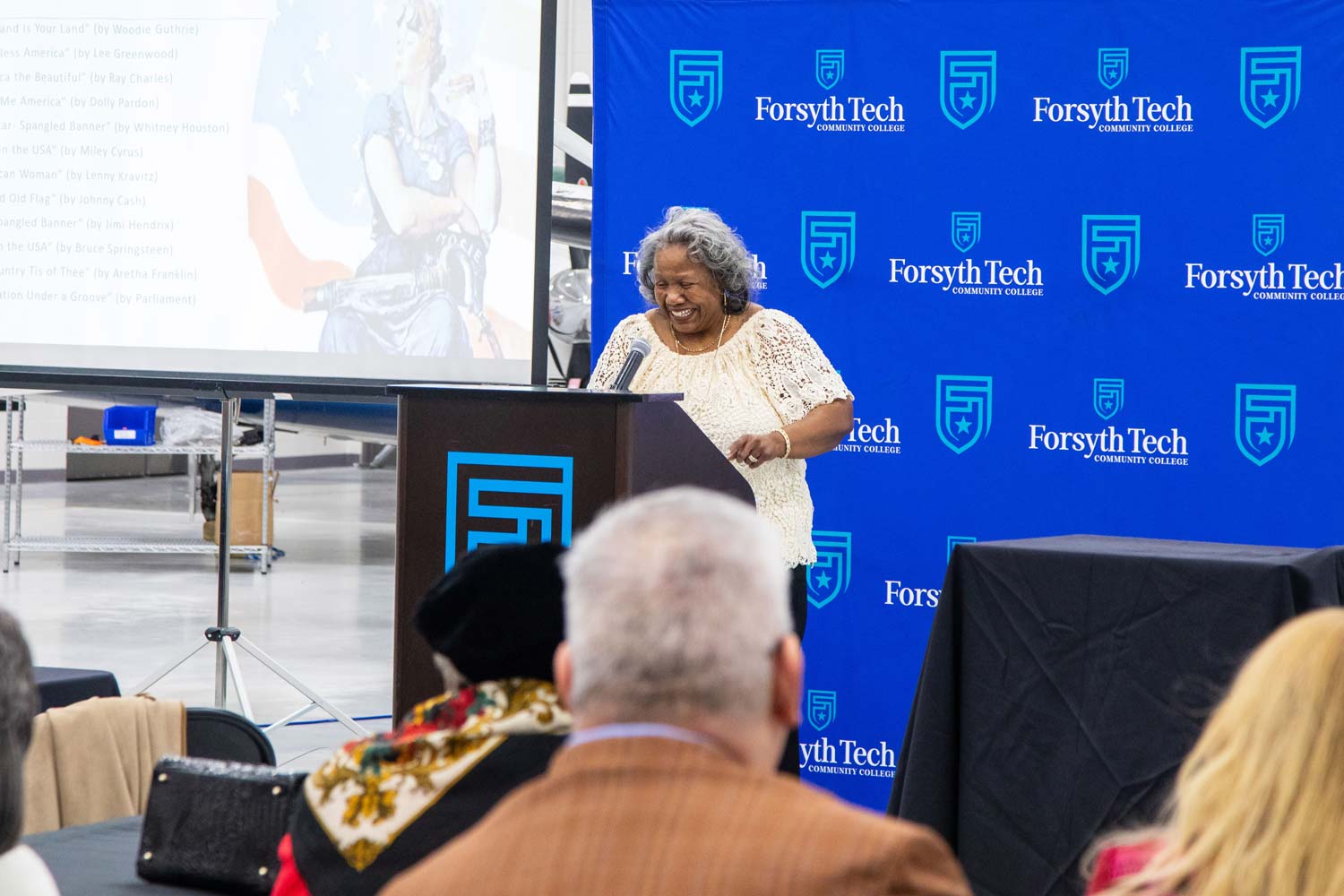
By highlighting local heroes and their contributions, she made history feel immediate and personal, reminding everyone that the fight for equality did not just happen in far-off places; it happened “in our own backyards.”
For instance, she recounted events like the 1960 sit-in protests in Greensboro, where four local college students sat down at a segregated Woolworth’s lunch counter, sparking a movement that led to the desegregation of the city’s restaurants – the first successful sit-in protest in North Carolina. Such examples underscored her message that the Civil Rights Movement was propelled by community members whose courage and persistence made a lasting impact. By weaving together historical events with personal anecdotes, Ms. Justice made the past come alive for the audience and encouraged listeners to see themselves as part of this ongoing story.
Throughout the keynote, a powerful theme emerged: using lessons from history as guidance for the present. Ms. Justice underscored that history is not just something to remember, but something to learn from and act upon. “Understanding our history empowers us to shape our future,” she reminded the audience, “The sacrifices of those who came before us challenge us to continue the work of justice and dignity for all.”
This call to action resonated strongly. As a community historian and preservationist, Ms. Justice sees history as a living force that should inform our choices today. By the end of her speech, attendees were not only more knowledgeable about local civil rights history, but also inspired to carry forward the legacy of advocacy in their own lives.
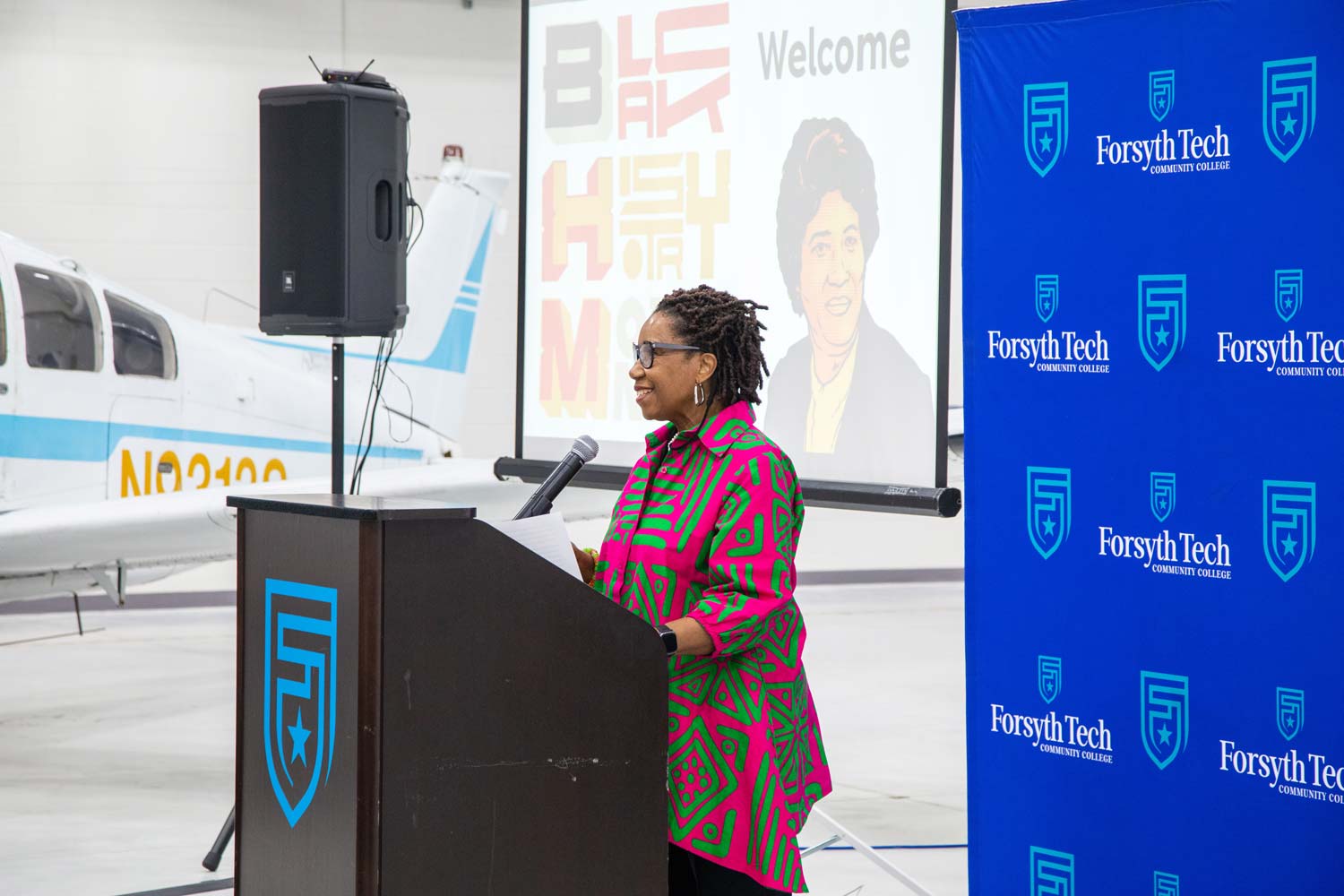
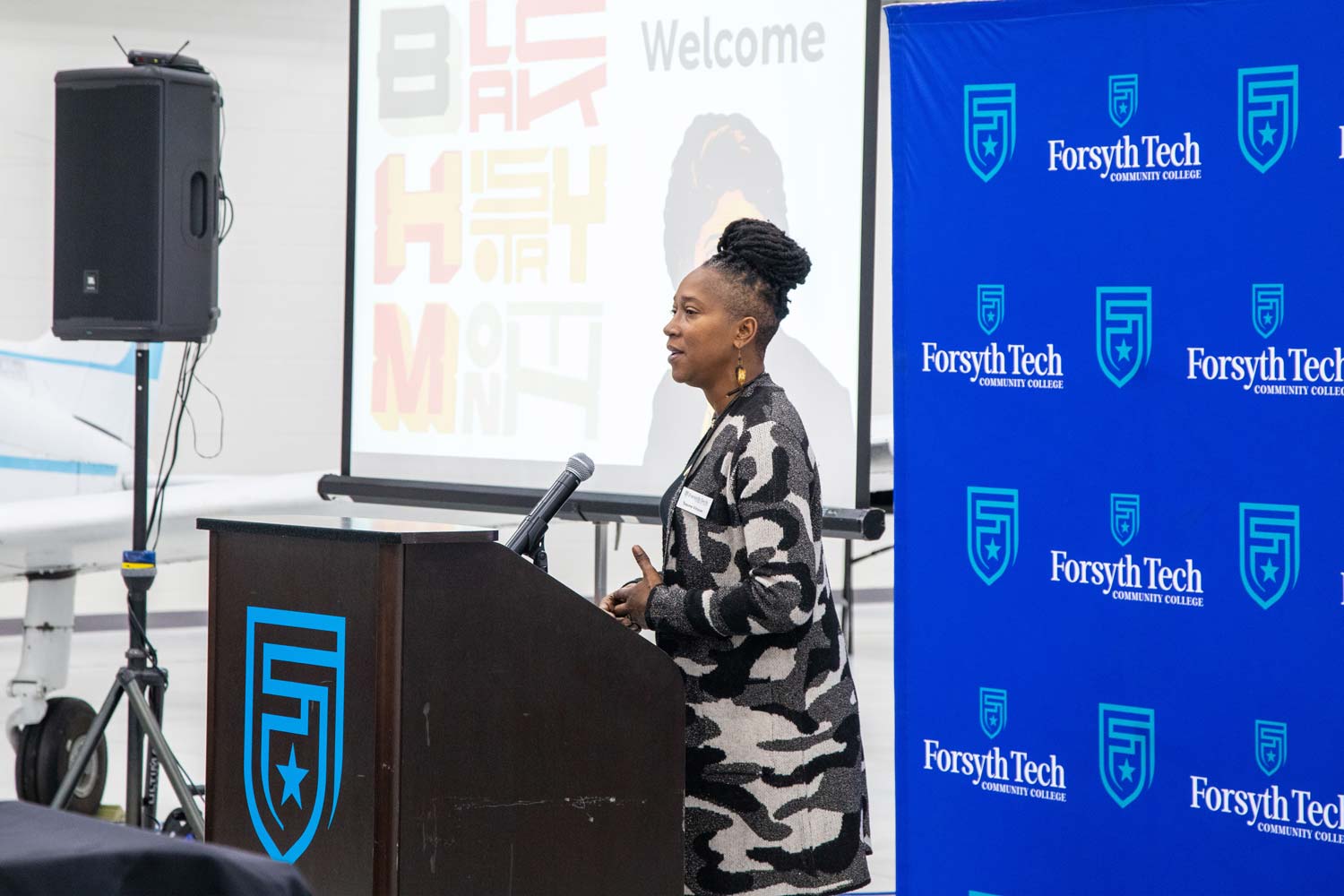
Ms. Justice also shared the story of Ms. Mazie Spencer Woodruff, a name that looms large in Forsyth County’s history. Ms. Woodruff was a pioneer in local government and a champion of education and social justice. She achieved a series of notable firsts and lasting contributions, becoming the first Black woman elected to serve on the Forsyth County Board of Commissioners, breaking racial and gender barriers in local governance.
She served on the Board from 1976 to 1990, paving the way for more inclusive representation. Woodruff was widely known for her dedication to education and social justice. During her tenure and community work, she focused on improving educational opportunities and fighting for fair treatment of all citizens. In recognition of her impact, Forsyth Tech has honored Ms. Woodruff by naming two of its centers after her. The Mazie S. Woodruff Center (opened in 1998) and the Mazie S. Woodruff Aviation Technology Lab (opened in 2021) both bear her name. These facilities stand as daily reminders of her trailblazing leadership and the doors she opened for others.
By looking back at the triumphs and struggles of those who came before, participants are encouraged to find direction for the future. The celebration ended with a note of gratitude and resolve: gratitude to all who attended and contributed, and a resolve to carry the lessons of history forward not just during Black History Month, but every single day.

